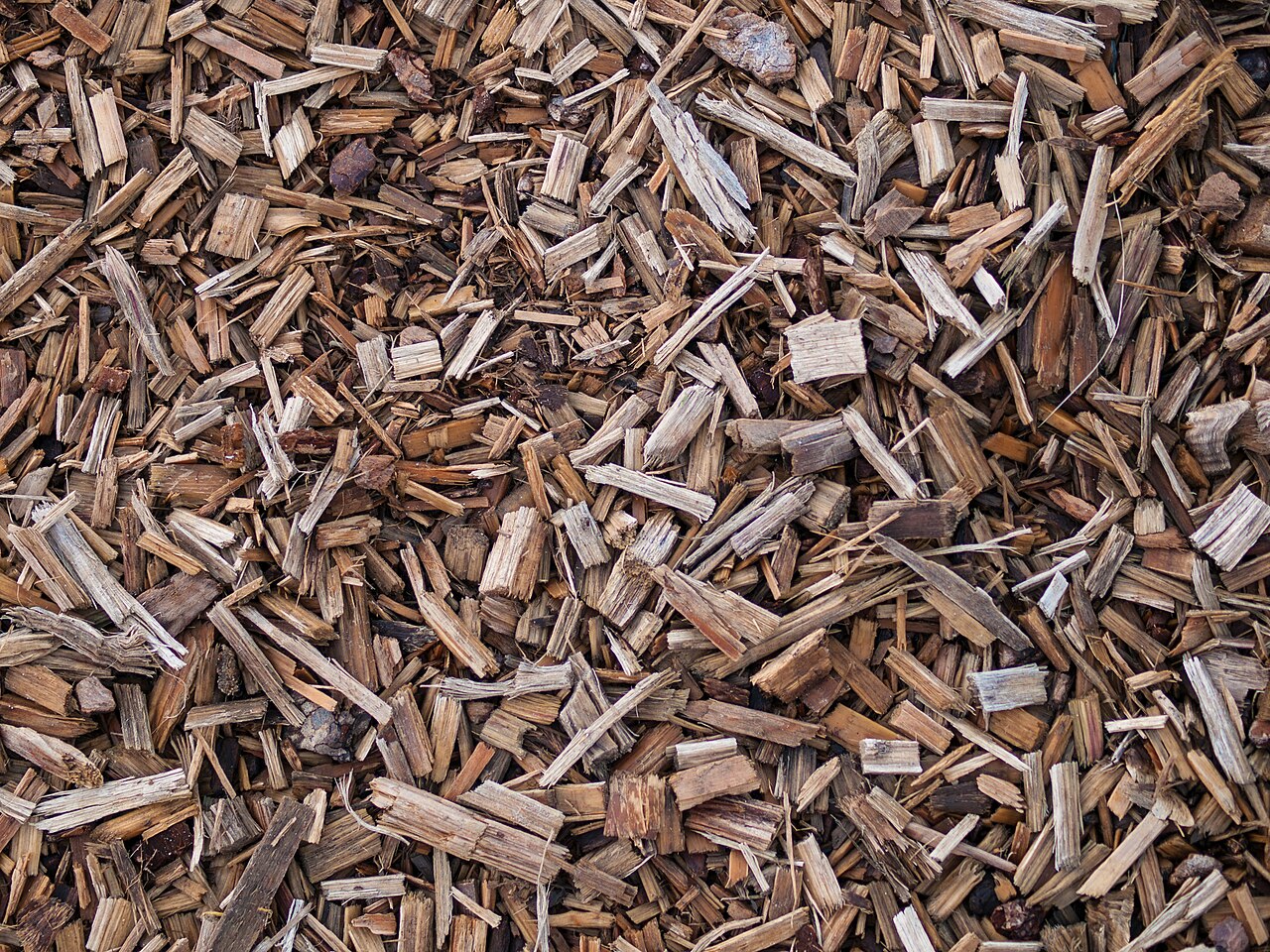
Compare the same material volume, then account for delivery, handling, and any minimum order.
Illustrative photograph. Budget figures below are worked examples, not expenses from the pictured scene.
A 10-by-10-foot bed at a selected depth of 3 inches needs 25 cubic feet before an allowance. That is 0.926 cubic yards. Two-cubic-foot bags require rounding 12.5 up to 13 bags, supplying 26 cubic feet. The chosen depth is a scenario; choose an appropriate depth for your planting and material.
Option
Volume purchased
Illustrative price
Included cost
13 bags, 2 ft³ each
26 ft³
$4 per bag
$52
Bulk, 1 yd³ minimum
27 ft³
$35 per yd³ + $40 delivery
$75
These prices are hypothetical. In this example bags cost $23 less, even though the bulk material alone costs less. If the bulk supplier offers collection with no fee, the comparison changes. Include your own collection costs and payload constraints.
Calculate the delivery break-even point
Break-even delivery charge = bag total − bulk material total. Here that is $52 − $35 = $17. Bulk matches the bag total only if delivery and other bulk fees together are $17 or less, with the same exclusions on each side.
Compare like with like
Check the mulch type, quality, volume units, minimum order, and where delivery will be left. A price per scoop cannot be compared until the supplier gives its volume. Bagged materials can be carried to separate beds; a bulk pile needs space and equipment to move it.
Scale the example
A 20-by-20-foot bed at the same depth requires 100 cubic feet, or 3.704 cubic yards. That is 50 two-cubic-foot bags, before an allowance. Larger orders spread a fixed delivery charge over more material, which is why the cheapest choice can change with bed size.
Split an irregular planting area into simple shapes you can measure. For rectangles, multiply length by width. For a circular bed, area is π × radius². Subtract hardscape or other areas that will not receive mulch, then multiply the remaining area by the selected depth in feet.
Depth in inches must be divided by twelve. A 100-square-foot bed at 3 inches therefore needs 25 cubic feet, not 300. The selected depth should suit the material, planting and existing layer; the arithmetic does not determine that choice.
Small-order rounding can reverse a unit-price comparison
Consider a hypothetical $4 price for a 2-cubic-foot bag and a $35-per-cubic-yard bulk price with $40 delivery and a one-yard minimum. Use those same terms at three order sizes:
Required volume
Whole bags
Bag material total
Bulk plus delivery
25 ft³
13
$52
$75 for 1 yd³
54 ft³
27
$108
$110 for 2 yd³
81 ft³
41
$164
$145 for 3 yd³
In this example, bags cost less at the first two sizes, while bulk costs $19 less at three yards. Bag delivery, tax and handling equipment are excluded here; include them if they apply. Bulk order increments may also change the billed volume.
Understand the delivery break-even point
At three cubic yards, the bag material order is $164 and bulk material is $105. The bulk option has $59 available for delivery and other additional charges before it reaches the bag total. A $40 delivery charge fits within that margin; a $70 charge does not.
That $59 threshold belongs to this order and these example prices. It is not a universal “bulk is cheaper above three yards” rule. Recalculate after changing bag size, sale price, minimum order or delivery terms.
Match the material and the drop-off
Compare the same type of mulch and confirm whether the supplier measures in cubic yards or an unspecified scoop. Ask where the load will be placed and whether the quoted fee covers the whole order. The route from the drop-off point to the beds can add substantial work even when it adds no invoice line.
Bags can be distributed around separate beds; bulk needs a suitable unloading space. Consider access, storage, weather and the amount you can move during the available work period. Cost is one part of the decision.